
For centuries, people with human needs went through countless milestones. Segregation, exclusion, integration, and inclusion are simple examples of people with human needs’ journeys toward equity. In fact, these phases were mainly consequences of the confusion around the definition of disability. Moral, charity, expert, medical and social models of disability have tried to define “disability”. However, the two most dominant models which have made a great contribution in defining disability are the social and medical models. Although the medical model was dominant among scholars in disability studies, educators, service providers, and politicians, the social model arguably has re-framed the definition of disability during the past two decades. s.
The Medical model of disability:
The medicalization of disability was the dominant paradigm for a while. The medical model emphasizes on the chronic illness and impairment and defines the disability as social deviance. In fact, its main focus is on what people can not do. In other words, considering their physical condition as the problem.
Media’s Role:

“we must find a cure, disabled people needed to be “fixed.”
Christopher Reeve
Media has a great contribution to stabilize medical model worldwide. Even after the Americans with Disabilities Act 1990, people with disabilities were promoted through the media as individuals who can not work or even have productive lives. In the United States, for instance, Clint Eastwood’s case, Million Dollar Baby’s movie, Christopher Reeve are clear examples of the dominance of the medical model on the American media at that time. All the above, intentionally or unintentionally have misled the public about the meaning of disabled people and their needs. Reinforcing the concept of disability as a personal trouble, above all, helped society to feel free with no responsibilities toward people with human needs.

The Social Model of Disability:
Initially, the social model of disability had presented by the Union of the Physically Impaired Against Segregation. However, Vic Finkelstein(1980) then Mike Oliver (1990) formalized this term later. According to Oliver, social model’s core is to emphasis on the social structures and barriers rather than illness or impairment. Therefore, disability is inherent or invisible depends on the social context. Limitations, attitudes, accesses, services, mobilities, economical barriers and inhospitable environment, for instance, are elements which could define disability.
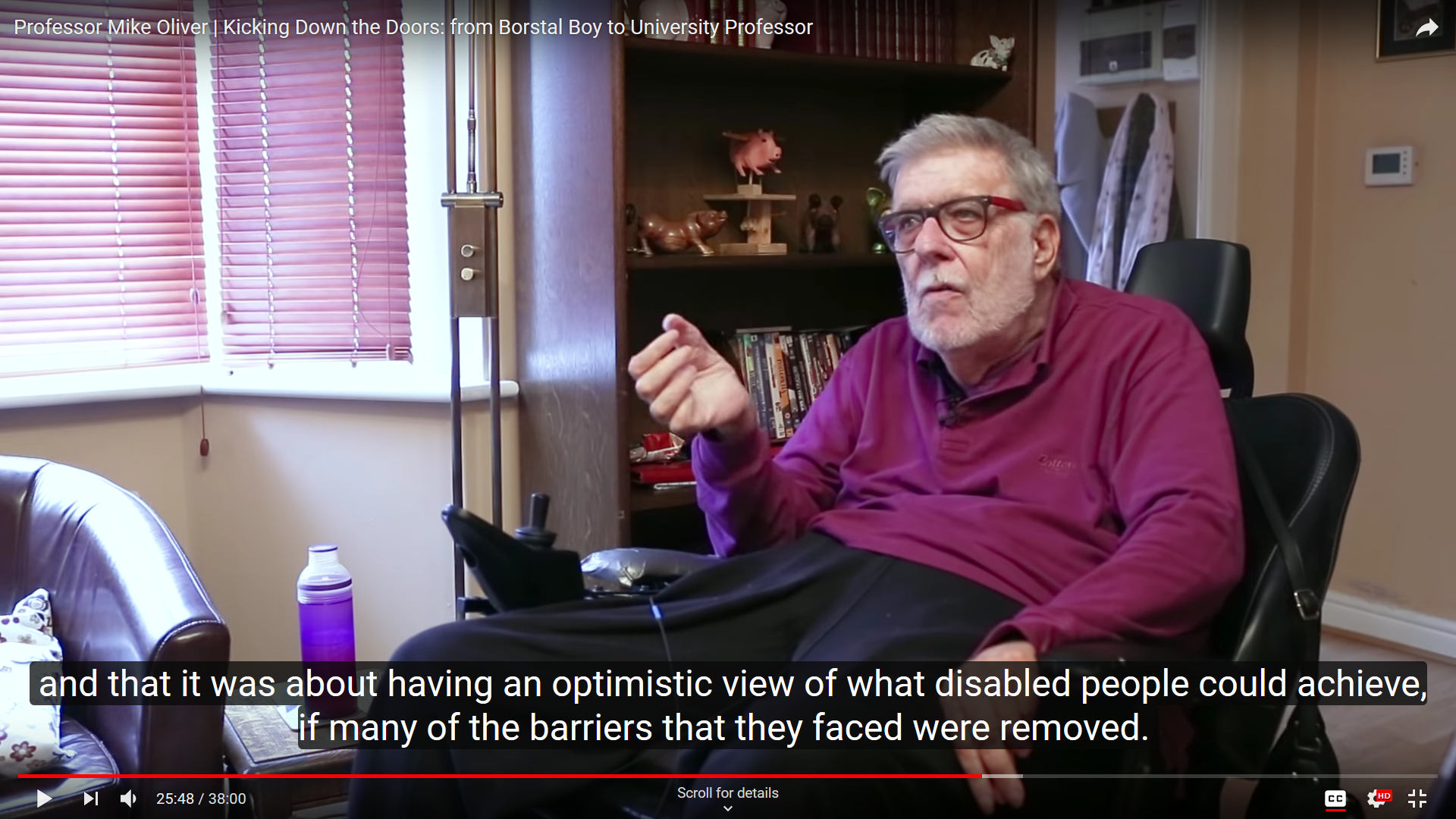
With these ideas in mind, social model of disability put the person at the center, focus on the outcomes, and promote independency and choices for individuals with human needs.
The Social Model Endorsing Inclusive Education:
Initially, inclusive education was considered as an innovation within special education. However, it did not take too long until Special Education has been “Under Siege” in Kauffman and Anastasiou words. There was a long run of argument among specialist educators about the realism of social model. Kauffman and Anastasiou (2011), who are special education scholars, claim that social model fails to classify the diversity of disabilities and identifying the variety of methods that can lead to a social fairness in education. Kauffman and Anastasiou (2011),presented a critique of social model by claiming that it provides unqualified support to inclusion and ignore an individual’s needs, and they also doubt the effectiveness of practicing inclusive education.
On the other side, According to Ballard’s (1997) inclusive education is seeking for non- discriminatory education, including discrimination against gender, race and disability. Furthermore, it does not overburden students with expectations and it guarantees equality in access to regular class rooms. In short, inclusive education emphasizes on accepting diversity. In this context, Barton (1997) believes that inclusive education is all about dealing with diversity and welcoming new concepts, empowering all individuals in a community and enjoying difference in an honored way.

Legislation:
The political goal of social model is to remove the social structure’s barriers, and endorsing the social inclusion of people with disabilities, creating an optimistic identity to people with special needs. (Finkelstein, 1980; Oliver, 1990,1993, 1996). In Australia, The Individuals with Disabilities Education Act (1990), Disability Discrimination Act (1992), Nationally Consistent Collection of Data on School Students with Disability (NCCD) and The National Disability Insurance Scheme (NDIS) are great steps toward non-discriminatory community and equity in various areas such as employment, education, sport, Accommodation, and services.
Implications:
In short, suitable physical environment such as accessible services, lower sidewalks, ramps and lifts is requirement to achieve genuine inclusion. In class rooms cases, pictures, audios and large prints are essential to cross the divide. However, culture acceptance, thoughtful practices, and teachers beliefs and values are the most fruitful distinction between inclusion and segregation communities.


 Learning 4 All